


On August 17, 2025, a new president will be elected in Bolivia. A few days ago, Bolivia’s Supreme Electoral Court published the list of the nine candidates who are eligible to run in the election. Former head of state Evo Morales is ineligible to run after serving three terms and facing various serious allegations, but he continues to call on his supporters to take to the streets and fight for his candidacy to be approved.
Three candidates from the Left are running in the elections, and six others primarily represent right-wing parties. Both camps are deeply divided. As a result, it remains entirely unclear how a new government intends to tackle the massive social, economic, and environmental challenges.
Economic missteps and political power struggles dominate the country, while the former ideals of the ruling MAS party are no longer recognizable. According to the 2009 Constitution, Bolivia was supposed to become a plurinational, welfare-oriented, and democratic state—a goal that has not been achieved. Human rights have not been upheld, and it is the indigenous communities who suffer the most. The rights of nature enshrined in the constitution have also fallen victim to economic interests. Between May and October 2024, an area larger than Portugal was destroyed by devastating wildfires, and many Indigenous people lost their homes and were forced to relocate. The expansion of extensively farmed land has benefited from this. The current government is campaigning on the promise that, if elected, it will push forward with oil production from the Mayaya X-1 oil field discovered north of La Paz, thereby soon covering 80 percent of the country’s fuel needs. Yet in recent years, little has been invested in infrastructure and the development of new gas fields. In lithium mining, Bolivia lags behind Argentina and Chile.
As a result of its monetary policy, the government has now run out of dollar reserves, which it needs, among other things, to import fuel. It is maintaining a fixed exchange rate for the boliviano (as we reported) and subsidizing fuel prices.
The economic situation of the population is becoming more precarious by the day; creeping inflation is taking hold in the country, and money is Tag value every Tag . Prices on the open market are rising steadily, while state-subsidized food and fuel are becoming scarce. In recent months, there have been repeated shortages in the fuel supply (as we reported).
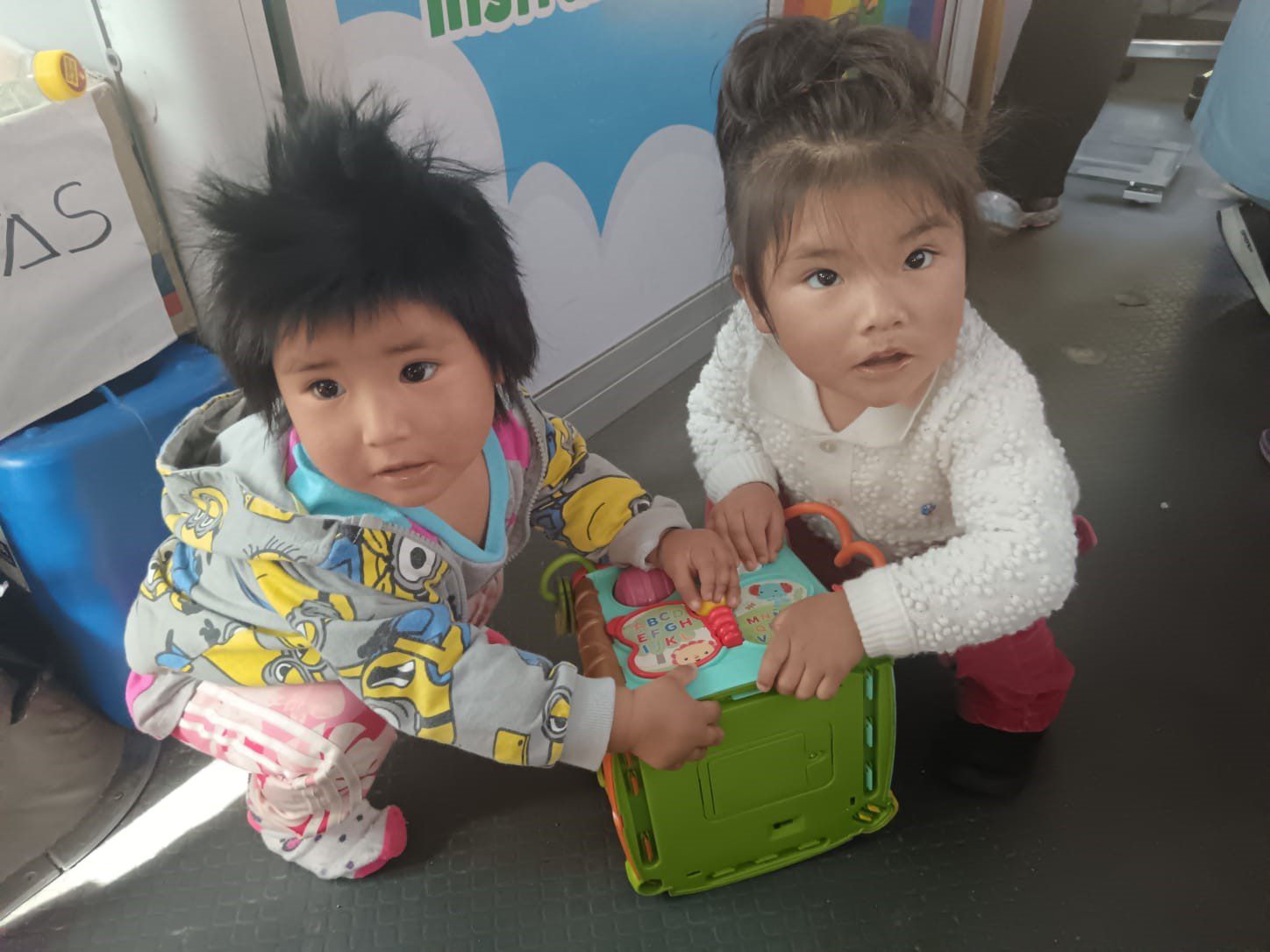
For thousands of children in Bolivia, a normal, healthy childhood is out of reach, and this situation is unlikely to change anytime soon. To provide at least some of the countless children in need in La Paz with basic medical care—and thus a more hopeful future—the Street Doctorswork tirelessly, treating their young patients—children and adolescents—with dedication, passion, and admirable perseverance. Please help us with your donation to give as many children as possible a little bit of health.




